1980 Turkish coup d’état
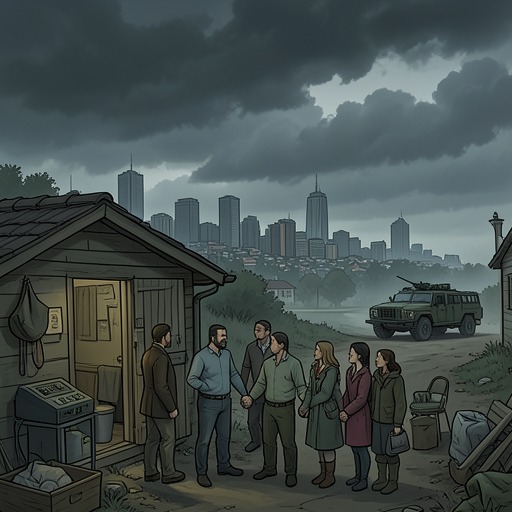
The Museum of InnocenceThe 1980 Turkish coup d’état brings martial law and a ten o’clock curfew into the repeated domestic life of Kemal Basmacı’s visits to Füsun’s family in Çukurcuma. The coup’s most immediate significance in his account is not an account of its seizure of power, but the way state-imposed time interrupts private time: the evening ends before Kemal feels he has seen enough of Füsun, and the journey home becomes a nightly race against the curfew.
Background and the Established Routine
By the time the coup occurred in September 1980, Kemal had been visiting the Keskin family for supper for about four years. His first visit was on October 23, 1976; by the end of the period he describes, he would count 1,593 suppers across 2,864 days, an average of four visits a week. The family expected him, kept a place for him at the table, and had settled on the tactful description that he came to sit with them. His unspoken purpose was to see Füsun.
Those evenings had their own dependable measures of time. The Keskin family’s German-made wall clock testified to the outside world, but the television had become the household’s practical timekeeper. At seven, as the clock appeared on the screen before the news on TRT, Füsun and her father checked their watches against it. Kemal usually arrived around seven and stayed until the nightly television closing ceremony, which ended near midnight. The coup’s curfew broke into this established rhythm with a deadline that could not be negotiated away.
The Curfew and the Forced Departure
The ten o’clock curfew required Kemal to leave at a quarter to ten, long before he felt that his longing had been satisfied. In the final minutes, he could become physically unable to rise, even as he urged himself to get up. His paralysis sharpened into panic as the deadline approached; when he and Çetin finally made it downstairs and into the Chevrolet, they worried they would not reach home in time.
They were often four or five minutes late. At first, soldiers did not stop the last stragglers racing along the avenues, but the drive offered no sense of safety or calm. Kemal and Çetin passed cars crashed at Taksim Square, Harbiye, and Dolmabahçe, where drivers who had hurried to beat the deadline sometimes got out and pummeled one another. The emptied, half-lit streets made the journey home part of the coup’s nightly presence in Kemal’s life, even when he reached home safely.
Private Time Against Official Time
The curfew transformed a recurring visit into a measured deprivation. Kemal had already experienced the supper visits as a private duration distinct from the public calendar; now the state fixed the point at which that duration had to end. The more urgently he tried to stay, the more sharply the deadline revealed how little control he had over the time he could spend with Füsun. He later remembered the coup’s evil most vividly through this personal loss: being hurried home before he had seen enough of her.
The change did not cure his immobility at the end of an evening. Instead, compressing his remaining time into a shorter interval intensified the struggle to leave. The curfew thus joined public force to a private compulsion: it made departure mandatory, but could not make Kemal want to depart.
Consequences and Narrative Significance
The account places a national political event inside an intimate routine rather than separating public history from domestic life. Television brought the country’s news and official ceremonies into the Keskin dining room; the curfew then carried state authority out into the streets and dictated when Kemal had to leave. A household clock, a television schedule, a supper table, and the deadline of ten o’clock become overlapping measures of time, each exerting a different claim on the evening.
The coup’s consequences in this episode are therefore both practical and emotional. It shortened the visits, forced Kemal and Çetin to hurry through dangerous streets, and intensified the pain of leaving Füsun. The later extension of the curfew to eleven o’clock altered the deadline, but the remembered pattern remained one of public time cutting across a private attachment.